LNEYA Industriekühler Hersteller Lieferant


Summary of Maintenance Items of Glycol Chiller
During the daily operation of glycol chiller, if the maintenance is not in place, the cooling effect of glycol chiller will be reduced. Therefore, in order to improve the operation efficiency of glycol chiller, we suggest that you should carry out necessary daily maintenance.
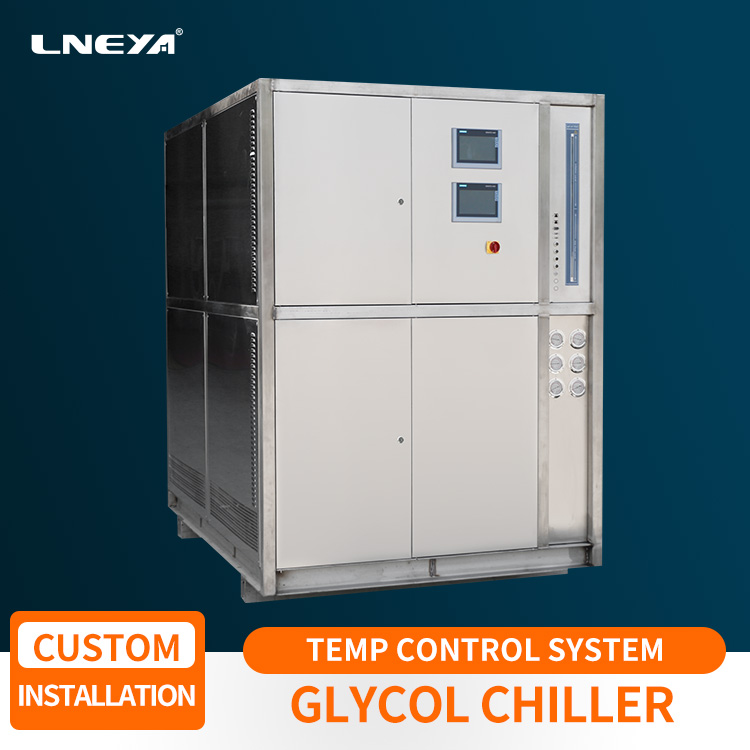
Inspection of refrigeration system of glycol chiller: generally, various problems will inevitably occur after long-term use of glycol chiller. Once there is a fault, we should carefully check the service condition of various parts of the machine, focusing on the refrigeration system, electrical system, air system and water system, and judge whether their functions are normal. We usually check them through sound and appearance. If there are problems, we suggest to replace them in time.
Refrigerant inspection of glycol chiller: regularly check whether the refrigerant of glycol chiller leaks: it can be determined by referring to the parameters displayed on the high and low pressure meter on the front panel of the host. According to the temperature change of air temperature (winter and summer), the pressure display of glycol chiller is also different. When the low-temperature chiller works normally, the high-pressure display is 11-17kg and the low-pressure display is 3-5kg.
Inspection of cooling water system of glycol chiller: check whether the cooling water system of glycol chiller is normal, whether the fan and sprinkler shaft of cooling water tower operate well, and whether the make-up water of the built-in water tank of chiller is normal.
System cleaning of glycol chiller: the glycol chiller shall be cleaned once a year after six months of use. The main cleaning parts include cooling water tower, cooling water pipe and condenser to ensure good refrigeration effect.
Voltage and current inspection of glycol chiller: regularly check whether the voltage and electric flow of glycol chiller are stable and whether the compressor operates normally. When the glycol chiller works normally, the voltage is 380V and the current is in the range of 11a-15a.
Of course, there are many other details that need your attention.
Verwandte Empfehlungen
-
The Use of Electronic Expansion Valve in Low Temperature Chiller Systems
1736In the low temperature chiller system, the electronic expansion valve plays a key role in controlling the operating power of the system in cooperation with compressors, condensers, evaporators, water-cooled screw chillers, air-cooled screw chiller...
Details anzeigen -

Vorsichtsmaßnahmen für den Betrieb von Reaktortemperiergeräten der Serie ZLF/SR
1690The temperature control equipment of the reaction kettle adopts the PID control method, which greatly improves the temperature control accuracy of the whole machine. The microcomputer for cooling or heating will automatically switch to work accord...
Details anzeigen -
Lneya’s high and low temperature cooling circulator instructions
1659The high and low temperature cooling circulator is developed and produced by LNEYA using its refrigeration and heating temperature control technology. When using high and low temperature cooling circulators, users are advised to use them according...
Details anzeigen -
Why does a glass reactor require a circulating chiller and heater?
1255The common glass reaction vessels on the market can be divided into three categories: negative pressure glass reaction vessels, vacuum glass reaction vessels, and high-temperature and high-pressure stirred glass reaction vessels. The g...
Details anzeigen