 LNEYA Industriekühler Hersteller Lieferant


Wie wählt man einen Wasserstoffkühler aus?
The chiller (also called cooling system or chiller) in the hydrogen production process is one of the key components to ensure the stable operation of the hydrogen production equipment. The chiller helps maintain the electrolyzer, reactor and other key components within the optimal operating temperature range by providing precise temperature control.
The role of chillers in hydrogen production
Temperaturregelung:
Während des Prozesses der Wasserstoffproduktion durch Wasserelektrolyse muss der Elektrolyseur innerhalb eines bestimmten Temperaturbereichs gehalten werden, um die Wasserstoffproduktions-effizienz zu optimieren und die Lebensdauer der Ausrüstung zu verlängern.
Das Kühlsystem entfernt die vom Elektrolyseur erzeugte Wärme über ein zirkulierendes Kühlmedium (normalerweise Wasser oder Ethylenglykol-Lösung), um dessen Temperaturstabilität zu gewährleisten.
Effizienz verbessern:
Eine ordnungsgemäße Temperaturregelung kann den Energieverlust reduzieren und die Gesamteffizienz des Wasserstoffproduktionsprozesses verbessern.
Das Vermeiden von Überhitzung kann Schäden am Elektrolyseur und anderen Komponenten verhindern und so die Wartungskosten senken.
Sicherheitsschutz:
Das Kühlsystem hilft, potenzielle Sicherheitsrisiken durch Überhitzung zu verhindern, wie z. B. Trockengebrennung des Elektrolyseurs oder Materialversagen.
• Provide overtemperature protection function, automatically shut down or alarm when abnormal temperature is detected.
Anpassung an verschiedene Wasserstoffproduktionsprozesse:
Verschiedene Wasserstoffproduktionsmethoden (wie alkalische Elektrolyse, Protonenaustauschmembran-Elektrolyse, Festoxid-Elektrolyse usw.) haben unterschiedliche Temperaturanforderungen, und der Kühler muss in der Lage sein, sich an diese unterschiedlichen Prozessanforderungen anzupassen.
Main types of hydrogen chillers
- Air-cooled chillers:
- Cool the circulating medium by dissipating heat through air.
- Suitable for places with limited space or water resources.
- Easy to install, but the cooling efficiency may be greatly affected by the ambient temperature.
- Water-cooled chillers:
- Dissipate heat through an external cooling tower or other water source.
- Better cooling effect, suitable for applications with high power or high temperature difference.
- Requires additional cooling towers and water supply systems, and the installation is relatively complicated.
- Cascade low-temperature chillers:
- Suitable for hydrogen production processes that require extremely low temperatures (such as below -40°C).
- Usually a two-stage or multi-stage refrigeration system is used to achieve lower temperature control.
- Cascade low-temperature chillers:
- Suitable for hydrogen production processes that require extremely low temperatures (such as below -40°C).
- Usually a two-stage or multi-stage refrigeration system is used to achieve lower temperature control.
Key technical parameters
- Refrigeration capacity:
- Select the appropriate refrigeration capacity according to the scale and heat generation of the hydrogen production equipment.
- For example, for large industrial hydrogen production units, a refrigeration capacity of more than 1500 kW may be required.
- Temperature control range:
•Precise control is usually required over a wide temperature range, such as from room temperature to -40°C or lower.
•Control accuracy is generally required to be ±1°C or less. - Flow rate:
•The flow rate of the cooling medium should be determined according to the needs of the hydrogen production equipment, usually tens to hundreds of liters per minute. - Automated control:
•Equipped with PID controller or other advanced temperature control technology to achieve automated temperature regulation.
•Support remote monitoring and data logging functions for easy management and maintenance.
Chillers related to hydrogen production play a vital role in ensuring efficient and safe operation of hydrogen production equipment. When selecting a suitable chiller, factors such as cooling capacity, temperature control range, flow rate, automation control, and safety protection measures need to be considered comprehensively.
Empfohlene Produkte
- MEHR
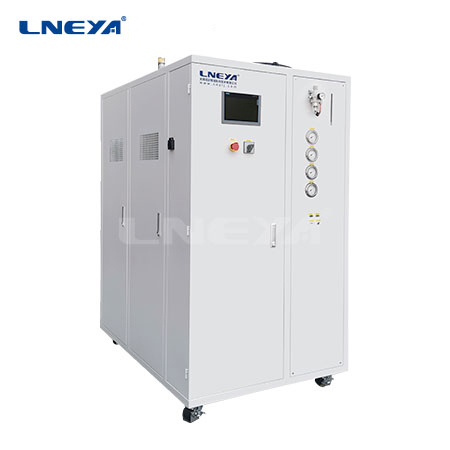
 KRY -40℃~+100℃ (1bis6)
Die Komponenten werden gekühlt und erhitzt intern durch Ethylenglykol wässrige Lösung für die Prüfung -40 ° C ~ 100 ° C (erweiterbar auf 150 ° C) Für die Macht Batterie-Lade-Management, die Präzision ...
- MEHR
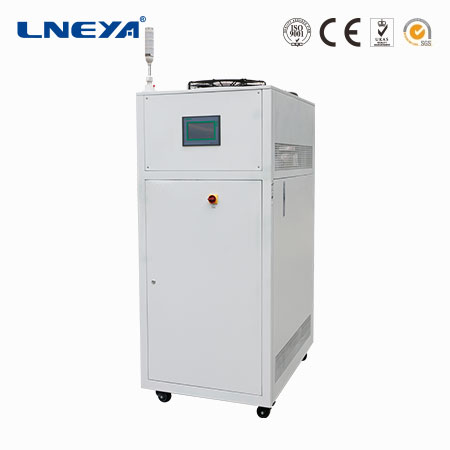
KRY -40℃~+100℃ (1zu1)
Kühlen, Heizen, Temperaturregelung, Durchflussregelung Verbinden Sie das zu prüfende Objekt mit einem Adapter für die Prüfplattform. Die Komponenten werden intern durch eine wässrige Ethylenglykol-Lösung für die Prüfung gekühlt und beheizt. ...
- MEHR
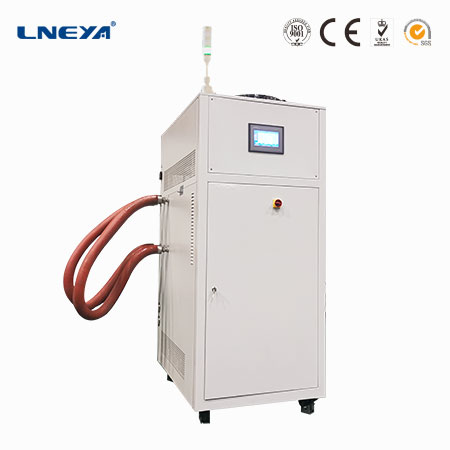
KRY -40℃~+100℃ (1zu2)
Temperaturbereich ist -40℃~+100℃, die auf +135℃ entsprechend der tatsächlichen Situation erweitert werden kann, und die Temperaturregelung Genauigkeit ist plus oder minus 0,5℃. Theequipment kann den Durchfluss und Druck unabhängig steuern, während c...
- MEHR
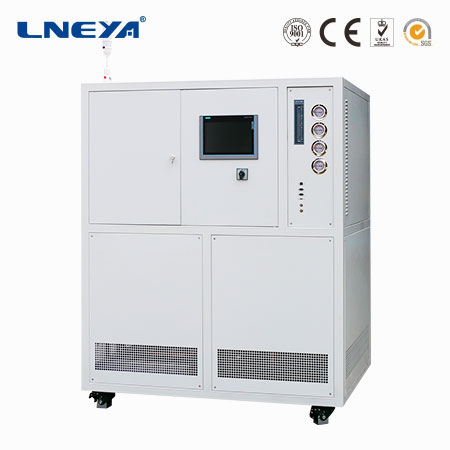
KRY -40℃~+100℃ (1bis3)
Dimension(A) cm Temperaturbereich ist -40℃~+100℃, die auf +135℃ entsprechend der tatsächlichen Situation erweitert werden kann, und die Temperaturregelung Genauigkeit ist plus oder minus 0.5℃. Theequipment können den Fluss und die...
Laden...
已经是到最后一篇内容了!

