 LNEYA Industriekühler Hersteller Lieferant


5 Common Types of Industrial Heating Systems
When it comes to temperature control in the industrial field, you probably think of cooling first. But heating is just as important. It speeds up chemical reactions and helps materials dry faster. This article explains five common types of industrial heating systems to help you make the best choice.
What Is an Industrial Heating System
An industrial heating system provides stable heat for factories, laboratories, or production equipment. It usually converts energy from steam, fuel, electricity, or thermal fluids into controllable heat used to raise the temperature during a process. It can heat gases, liquids, or solids.
The biggest difference from small household heaters is that industrial systems can run continuously for long periods. They also offer higher temperature accuracy and better stability.
Common Types of Industrial Heating Systems
Common industrial heating systems include steam heating systems, fuel combustion heating systems, electric heating systems, thermal-fluid heating systems, and heat recovery systems. Each type has a different energy source and application range.
Steam Heating Systems
Steam heating is one of the oldest and most mature industrial heating methods. The boiler heats water until it boils and produces steam. Pipes deliver the steam to different heat exchangers, jackets, or coils, where it indirectly heats the process. When the steam meets a cooler surface, it releases heat evenly and condenses into water.
Steam heating systems are often used in industries that require strict control of cleanliness and humidity, such as food, beverage, textile, and pharmaceutical plants. However, maintenance can be complex. Steam traps and condensate systems need regular inspection to prevent scale buildup and energy waste.
Fuel Combustion Heating Systems
Fuel heating systems rely on burning natural gas, oil, or other fuels to produce heat directly. The hot gases generated by combustion transfer energy to air, water, or thermal oil, and then exchange heat with the process through a heat exchanger.
These systems can reach very high temperatures quickly, so they are popular in heavy industries such as metalworking, ceramics, and chemical processing. The main drawback is emissions, so proper ventilation and additional equipment are needed to reduce environmental impact.
Modern burner technology and automatic controls have made these systems much more efficient and cleaner than older designs. When natural gas is available on site, fuel combustion remains a practical option.
Electric Heating Systems
Electric heating systems usually convert electrical energy directly into heat through resistance elements such as coils or rods. These heaters are compact, easy to control, and can provide precise temperature regulation. They are widely used in laboratories, semiconductor manufacturing, and medical industries that need a clean and stable heat source.
However, electricity can be expensive in some areas, so electric heaters may not be suitable for large-scale heating needs.
Thermal-Fluid or Hot-Fluid Heating Systems
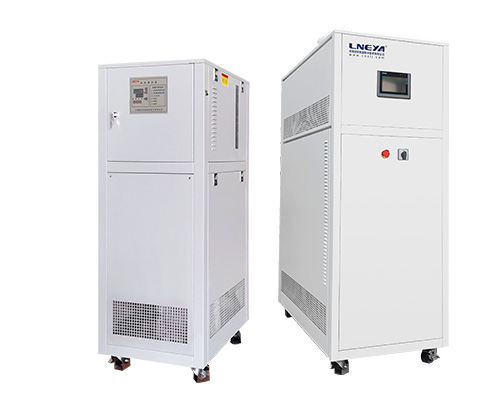
Thermal-fluid systems, also called hot oil or heat transfer fluid systems, are widely used when stable, controllable heating is needed without high steam pressure. Instead of water, they circulate a specially formulated thermal oil or synthetic fluid that can reach temperatures up to 350°C (660°F).
The heat is generated in a thermal oil heater or heat exchanger and then circulated through the process equipment. Because the system operates at relatively low pressure, it is safer and more energy-efficient than steam at the same temperature.
Thermal-fluid systems are common in chemical plants, pharmaceutical production, and plastic extrusion lines. They work well with chillers to form temperature control units that can switch between heating and cooling depending on the process stage.
Hybrid and Heat-Recovery Systems
Hybrid heating systems can combine electric components with fuel combustion or integrate heat pumps and chillers to recover waste heat from one process and reuse it in another.
For example, a heat recovery chiller can capture waste heat from condenser water and use it for heating another process. If your plant has some processes that need cooling and others that need heating, this method can reduce overall energy consumption.
In addition, hybrid systems offer flexibility. When electricity is cheaper at night, electric heaters can be used. When fuel prices drop, the system can switch to fuel heating.
How to Choose the Right Industrial Heating System
Before choosing an industrial heating system, you need to consider temperature range, available energy, Kostenund Wartung ability. You can ask yourself:
• What kind of liquid or material needs to be heated? Steam heating works well for water, while thermal oil is better for high-temperature chemical baths.
• How precise does the temperature control need to be? Electric heating and thermal-fluid systems offer higher accuracy than fuel combustion systems.
• What energy sources are available in your plant? If you have gas lines, fuel heating may be more cost-effective. If not, electric or hybrid systems might be better.
• Do you have maintenance personnel? Steam systems and combustion boilers require regular inspection, while electric heating systems need very little maintenance.
• What are your sustainability goals? If you focus on energy saving and emission reduction, heat recovery and hybrid systems are good options.
Customize Your Industrial Circulation Heater
LNEYA provides circulation heaters und heat recovery chillers that can be customized for your application. If you have industrial heating needs, feel free to discuss them with our engineers.
📞Phone:+86 189 1425 3067
🌐Website: https://www.lneya.com
✉️Fill out the form to receive a quote: https://www.lneya.com/contact

Neueste Blogs
- Chiller Components and Refrigeration Fundamentals Guides
- Chiller Types and Selection Guides
- How Does a Peltier Cooler Work
- Peltier Chiller vs. Compressor Chiller
- What Is a Peltier Chiller
- OEM vs Aftermarket Chiller Spare Parts
- Chiller Surge
- Chiller Cooling Capacity Units
Katalog
- Dezember 2025
- November 2025
- Oktober 2025
- September 2025
- August 2025
- Juli 2025
- Juni 2025
- Mai 2025
- März 2025
- Februar 2025
- Januar 2025
- Dezember 2024
- November 2024
- Oktober 2024
- September 2024
- August 2024
- Juli 2024
- Juni 2024
- Mai 2024
- April 2024
- März 2024
- Februar 2024
- September 2023
- Juli 2023
- Juni 2023
- Mai 2023
- Januar 2023
Tag
luftgekühlte Kältemaschine Kühler Installation der Kältemaschine Wartung von Kühlanlagen chiller refrigerant Kältemaschinen Kalte Montage Gefrierschrank Kaltwassersatz Kühl-Heizsystem cooling system dynamisches Temperaturkontrollsystem energieeffizienter Chiller explosionsgeschützter Kühler Gefrierschrank Heizungsumwälzpumpe Industriekühler Industriekälteanlagen Industriekühlung industrieller Gefrierschrank Industriekühlschrank Mantelreaktor Laborkühlschrank Niedertemperaturkühler Nachrichten Ölkühler Prozesskühler process cooling Reaktorkühler Reaktorkühlung Reaktorkühlung Heizung Reaktorheizung Kühlung Kältethermostat Schneckenkühler Halbleiter-Kühlgerät Halbleiter-Testkühler sundi tcu Temperaturkontrolle Prüfkammer Thermostat Ultra-Niedertemperatur-Kühler Fahrzeug-Test-Kühler Kaltwassersatz wassergekühlte Kältemaschine
Kontakt
Verwandte Chiller


KONTAKT US
TEL:
EMAIL:
WeChat & WhatsApp:

Wechat QR

Haben Sie eine Frage oder benötigen Sie ein Angebot? Füllen Sie das untenstehende Formular aus, und unser Team wird sich innerhalb von 24 Stunden bei Ihnen melden.

