 LNEYA Industriekühler Hersteller Lieferant


Advantages of Custom Chillers
Standard chillers are fine for many situations. But when your process is sensitive or your shop is unusual, a standard is difficult to use. This is when a custom chiller becomes the best option. This article explains why a custom chiller is worth investing in.
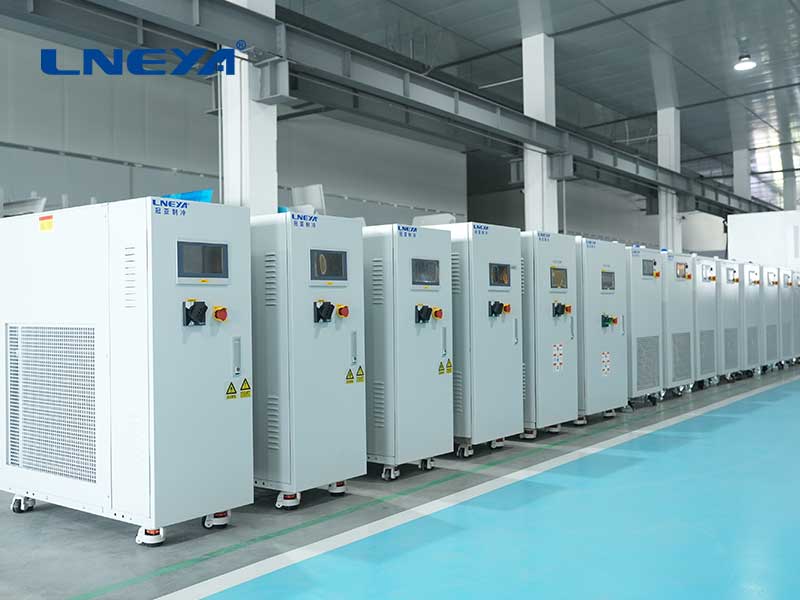
Precision Temperature Control for Complex Processes
When a process needs tight control, a tiny swing in temperature matters. Think of a chip test rack that heats suddenly when power spikes. Or an optics bench where a few tenths of a degree will change alignment.
A custom chiller brings multiple sensors to the right spots. One sensor at the supply, one at the return, and sometimes a probe inside the tool. The controller reads them all and makes small corrections fast. Engineers tune the PID loops to your heat profile. That means less overshoot and fewer adjustments by operators.
Engineers also size the circulation loop to avoid thermal lag. If you run low flow or viscous fluids, a standard pump will not respond well. A matched pump and control valve let the chiller move heat quickly. In short term tests you will see the setpoint hold better and recovery time drop.
Compatibility with Special Heat Transfer Media
Not all systems use water. Glycol blends, silicone oils, and high temperature synthetic fluids are common in labs and plants. Each fluid wants different seals, different metallurgy, and different pump characteristics.
A custom chiller uses materials that last with your fluid. Seals and gaskets are picked so they do not swell or harden. Heat exchangers are sized to match fluid viscosity. For high temperature loops engineers design the piping to avoid hot spots and trapped pockets.
Choosing the wrong material is an expense you do not want. Leaks, frequent seal changes, and fouled exchangers hurt uptime and cost more over time. A custom unit avoids that by matching parts to the fluid from day one.
Application Matched Cooling Capacity and Flow Design
Heat load numbers on a datasheet rarely tell the whole story. Some processes produce steady heat. Others jump around. A custom chiller is sized to the real pattern of your load and the real layout of your piping.
If your process spikes, a variable speed compressor or multiple refrigeration circuits help. If your piping run is long or has elevation changes, the pump is selected to provide the needed head. Those details affect how the chiller behaves during production. When components are sized to the true application you avoid short cycling and keep temperature stable.
Good flow design cuts energy use too. Moving heat efficiently often saves more power than simply using a larger compressor. You gain quieter operation and longer life for pumps and motors.
Built for Environment
Chillers work in many places. Some live in climate controlled rooms. Some live outside in heat and cold. Some sit in rooms with corrosive vapors. Each environment has unique needs.
Für outdoor installations engineers provide freeze protection and fan control so the unit runs reliably year round. For corrosive areas engineers use stainless steel and protective coatings on wetted parts. For cleanrooms engineers control materials and airflow so particle generation stays low.
If your area has flammable vapors engineers can design an electrically safe package that meets the right standards.
Integration with Production and Control Systems
Data that sits in a chiller is not useful unless it talks to the rest of the plant. Custom chillers connect to PLCs and SCADA systems using common industrial protocols. That means setpoint changes, alarms, and trends show up in the control room.
That integration makes simple automation possible. If the chiller reports rising outlet temperature, your line controller can slow the process or switch on a backup cooler. Trend logs help technicians spot slow failures before they become downtime.
Modern interfaces also let technicians access data remotely. Remote access saves travel time, and it shortens Fehlersuche when something goes wrong late at night.
Design Your Own Custom Chiller
If your current cooling feels like a compromise, think about what you want it to do. Share your heat map, your fluid type, and your piping layout with our engineers, who will design a custom chiller that perfectly matches your operating conditions.
📞Phone:+86 189 1425 3067
🌐Website: https://www.lneya.com
✉️Fill out the form to receive a quote: https://www.lneya.com/contact

Neueste Blogs
- Chiller Components and Refrigeration Fundamentals Guides
- Chiller Types and Selection Guides
- How Does a Peltier Cooler Work
- Peltier Chiller vs. Compressor Chiller
- What Is a Peltier Chiller
- OEM vs Aftermarket Chiller Spare Parts
- Chiller Surge
- Chiller Cooling Capacity Units
Katalog
- Dezember 2025
- November 2025
- Oktober 2025
- September 2025
- August 2025
- Juli 2025
- Juni 2025
- Mai 2025
- März 2025
- Februar 2025
- Januar 2025
- Dezember 2024
- November 2024
- Oktober 2024
- September 2024
- August 2024
- Juli 2024
- Juni 2024
- Mai 2024
- April 2024
- März 2024
- Februar 2024
- September 2023
- Juli 2023
- Juni 2023
- Mai 2023
- Januar 2023
Tag
luftgekühlte Kältemaschine Kühler Wartung von Kühlanlagen Kältemaschinen Kalte Montage Gefrierschrank Kaltwassersatz dynamisches Temperaturkontrollsystem energieeffizienter Chiller Heizungsumwälzpumpe Industriekühler Industriekälteanlagen Industriekühlung industrieller Gefrierschrank Industriekühlschrank Mantelreaktor Laborkühlschrank Niedertemperaturkühler Nachrichten Prozesskühler process cooling Reaktorkühlung Reaktorheizung Kühlung Kältethermostat Schneckenkühler Halbleiter-Kühlgerät Halbleiter-Testkühler sundi tcu Temperaturkontrolle Prüfkammer Thermostat Ultra-Niedertemperatur-Kühler Fahrzeug-Test-Kühler Kaltwassersatz wassergekühlte Kältemaschine
Kontakt
Verwandte Chiller


KONTAKT US
TEL:
EMAIL:
WeChat & WhatsApp:

Wechat QR

Haben Sie eine Frage oder benötigen Sie ein Angebot? Füllen Sie das untenstehende Formular aus, und unser Team wird sich innerhalb von 24 Stunden bei Ihnen melden.

