 LNEYA Industriekühler Hersteller Lieferant


How to Import Chillers from China: Everything Overseas Buyers Should Know
Many overseas buyers excited about importing Kältemaschinen from China but unsure where to start. This article explains what you should pay attention to when buying equipment overseas.
Why Import Chillers from China
Competitive Pricing with Scalable Quality
The biggest reason most buyers look to China is value. Chinese chiller manufacturers combine automated production with flexible customization, which helps control costs without cutting corners.
If you visit a China industrial chiller supplier, you’ll often find lean production lines using laser cutting, CNC machining, and automated brazing for consistent quality. Costs remain lower than in Europe or the U.S., but the quality gap has narrowed dramatically.
What makes this even more appealing is scalability. You can start with a small OEM batch and scale up once you verify performance. Many factories support custom industrial chillers made to your process, such as high-temperature oil chillers, low-temperature glycol systems, or semiconductor process chillers.
Mature Manufacturing Supply Chain
A typical China Kaltwassersatz factory sources compressors from international brands like Copeland or Bitzer, and control parts from Schneider or Siemens. Local suppliers handle sheet metal, insulation, and piping, shortening lead times.
Wide Product Range for Different Industries
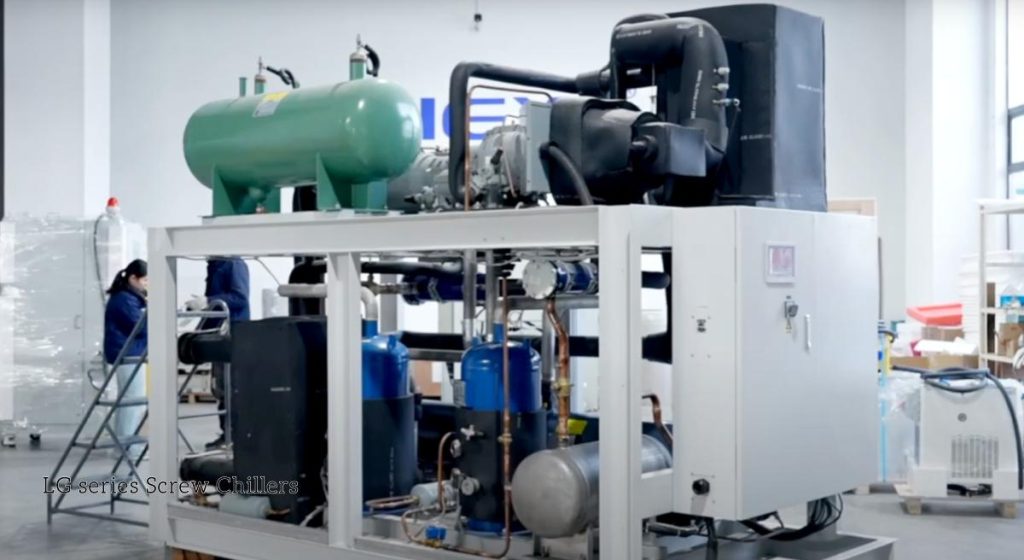
Unlike many Western suppliers focused on single niches, Chinese manufacturers offer full lines of products from small Laborkühler to 500-kilowatt process cooling systems.
You’ll find chillers for food processing, pharmaceutical production, electroplating, data centers, and even extreme-temperature test chambers. You can match multiple applications without juggling several vendors.
Understand Cooling Standards and Certifications
Key Global Standards
Before shipping, always check compliance with international standards. A reliable Chinese chiller manufacturer should provide CE certification for Europe, UL certification for North America, and ISO quality management documentation.
If you’re importing chillers from China to the U.S., confirm that electrical components meet UL or equivalent safety standards. For Europe, ensure your CE certified chiller exporter includes the Declaration of Conformity and correct voltage labeling. Some buyers overlook these small details, which later cause customs delays or installation issues.
What to Check Before Shipment
Ask your supplier to share factory test data. This includes Kühlleistung, power input, outlet temperature stability, and safety test reports. A video of the test run before shipment helps confirm that the unit meets your specifications.
Inspect the nameplate carefully. It should show model number, voltage, refrigerant type, and serial number. If anything looks unclear, request clarification before the goods leave port.
Avoiding Compliance Problems at Customs
Incomplete documentation is one of the most common causes of customs trouble. Make sure the shipment includes the invoice, packing list, and certificate of origin. For CE and RoHS products, documentation should match the actual model exported. Keep all PDFs organized before the goods arrive.
Communication and Technical Specification
Define Process Requirements Clearly
Most issues between overseas buyers and Chinese suppliers come from unclear technical communication. Don’t just say “5-ton chiller.” Share your process parameters, such as medium you use, target inlet and outlet temperatures, flow rateund ambient conditions.
When you define these parameters, a skilled engineer can size the condenser, evaporator, and compressor correctly. This avoids under-cooling, oversized systems, or unstable temperature control.
Common Misunderstandings in Translation
Sometimes, terms like “cooling capacity” or “temperature range” are interpreted differently. Make sure both sides agree on the test conditions. Ask for drawings or data sheets in English. A good China chiller exporter will be used to this and can provide bilingual documentation.
Logistics, Shipping, and Installation
Packaging and Seaworthy Protection
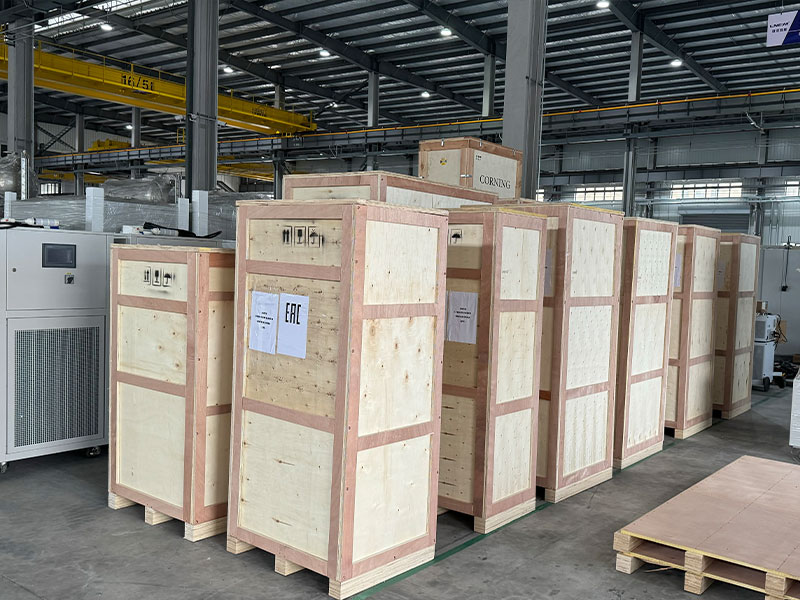
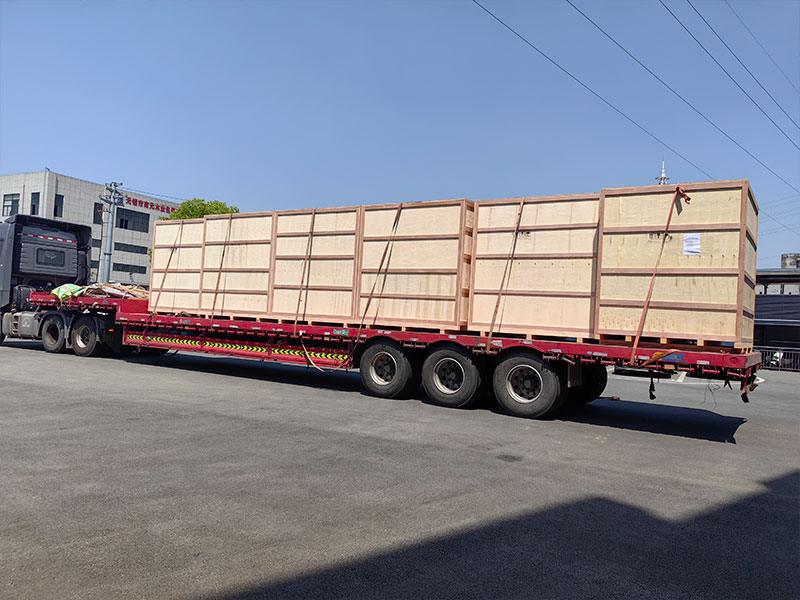
Industrial chillers are heavy, sensitive machines. They must be packed correctly for sea transport. A dependable China water chiller factory will use strong wooden crates, moisture-proof wrapping, and internal shock absorption. Units with open frames should have protective steel bars to prevent deformation.
Lead Time and Shipping Methods
Lead times vary from 20 to 45 days depending on model complexity. For standard units, shipping by sea is the most cost-effective option. For urgent projects or spare parts, air freight can shorten delivery to less than a week.
If your project has a tight timeline, coordinate shipping with your freight forwarder and confirm container loading photos before departure.
Preparing for Commissioning
Once the chiller arrives, check for any visible transport damage before installation. The factory should provide a clear installation manual, wiring diagram, and pre-start checklist. Many Chinese manufacturers, including LNEYA, offer remote guidance via video or online chat during commissioning.
After-Sales Service and Spare Parts
Remote Technical Support
Modern Chinese chiller suppliers understand that service matters as much as the product itself. Most provide lifetime remote support through email, video, or WhatsApp. Good factories can connect you directly with an engineer, not just a salesperson.
Spare Parts Availability
Before importing chillers from China, confirm that spare parts, especially compressors, sensors, and controllers, are available locally or can be shipped quickly. Some suppliers keep overseas warehouses or partner with local distributors to simplify maintenance.
Maintenance Documentation
A proper maintenance guide helps your technicians keep the system in top shape. It should list recommended oil changes, filter cleaning intervals, and alarm reset steps. Clear documentation also extends the system’s life and prevents downtime.
How to Evaluate a Reliable Supplier
Check Factory Background and Export History
Visit the supplier if possible. If not, request photos or videos of their production line. Check if they have exported to your country before. A legitimate Chinese chiller manufacturer will have export records, references, and an English-speaking sales team familiar with import documentation.
Review Case Studies and Customer References
Ask for case studies in your industry. For example, if you’re in pharmaceuticals, see if the supplier has delivered temperature-controlled solutions to GMP facilities. Testimonials from real clients say more than fancy brochures.
Evaluate Technical Communication
The best supplier isn’t just the cheapest one. It’s the one whose engineers understand your process language. During discussions, notice how they answer technical questions. Do they recommend suitable refrigerants for your ambient temperature? Do they check your cooling load calculations? These are signs of an experienced exporter who values long-term cooperation.
Import Your Chiller from LNEYA
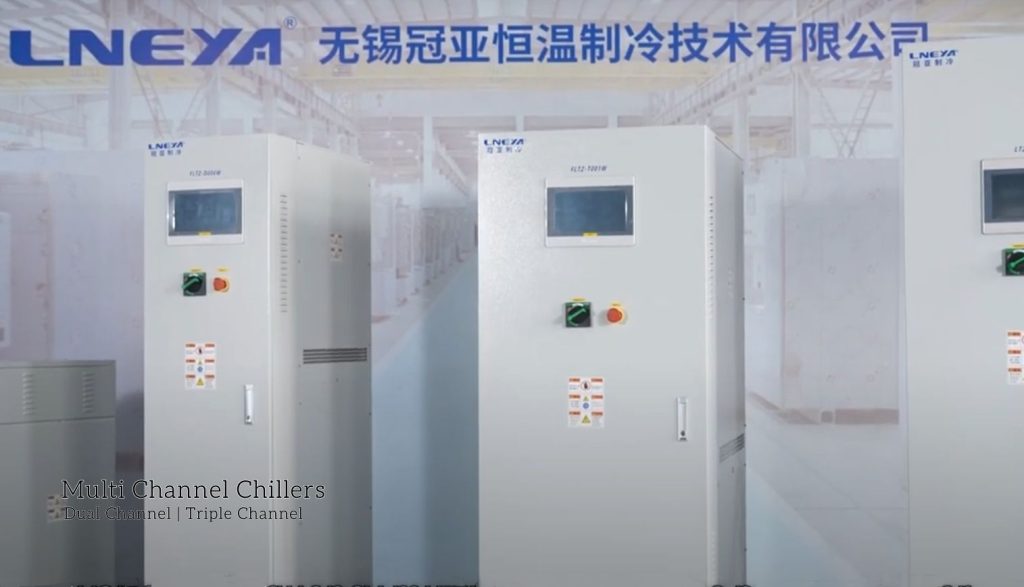
If you are planning how to import chillers from China, LNEYA can be your reliable partner. As a CE certified chiller exporter and OEM manufacturer, LNEYA designs and builds precision cooling systems for industries ranging from semiconductors and medical imaging to chemical processing and testing laboratories.
📞Phone:+86 189 1425 3067
🌐Website: https://www.lneya.com
✉️Fill out the form to receive a quote: https://www.lneya.com/contact

Neueste Blogs
- Chiller Components and Refrigeration Fundamentals Guides
- Chiller Types and Selection Guides
- How Does a Peltier Cooler Work
- Peltier Chiller vs. Compressor Chiller
- What Is a Peltier Chiller
- OEM vs Aftermarket Chiller Spare Parts
- Chiller Surge
- Chiller Cooling Capacity Units
Katalog
- Dezember 2025
- November 2025
- Oktober 2025
- September 2025
- August 2025
- Juli 2025
- Juni 2025
- Mai 2025
- März 2025
- Februar 2025
- Januar 2025
- Dezember 2024
- November 2024
- Oktober 2024
- September 2024
- August 2024
- Juli 2024
- Juni 2024
- Mai 2024
- April 2024
- März 2024
- Februar 2024
- September 2023
- Juli 2023
- Juni 2023
- Mai 2023
- Januar 2023
Tag
luftgekühlte Kältemaschine Kühler Installation der Kältemaschine Wartung von Kühlanlagen chiller refrigerant Kältemaschinen Kalte Montage Gefrierschrank Kaltwassersatz Kühl-Heizsystem cooling system dynamisches Temperaturkontrollsystem energieeffizienter Chiller explosionsgeschützter Kühler Gefrierschrank Heizungsumwälzpumpe Industriekühler Industriekälteanlagen Industriekühlung industrieller Gefrierschrank Industriekühlschrank Mantelreaktor Laborkühlschrank Niedertemperaturkühler Nachrichten Ölkühler Prozesskühler process cooling Reaktorkühler Reaktorkühlung Reaktorkühlung Heizung Reaktorheizung Kühlung Kältethermostat Schneckenkühler Halbleiter-Kühlgerät Halbleiter-Testkühler sundi tcu Temperaturkontrolle Prüfkammer Thermostat Ultra-Niedertemperatur-Kühler Fahrzeug-Test-Kühler Kaltwassersatz wassergekühlte Kältemaschine
Kontakt
Verwandte Chiller


KONTAKT US
TEL:
EMAIL:
WeChat & WhatsApp:

Wechat QR

Haben Sie eine Frage oder benötigen Sie ein Angebot? Füllen Sie das untenstehende Formular aus, und unser Team wird sich innerhalb von 24 Stunden bei Ihnen melden.

