 LNEYA Industriekühler Hersteller Lieferant


Lab Chiller vs Industrial Chiller : What’s the Difference
The difference between a lab chiller and an Industriekühler can be huge. If you pick the wrong one, you may end up with unstable temperatures, higher maintenance costs, or wasted energy. Knowing what separates them will help you make a smarter investment.
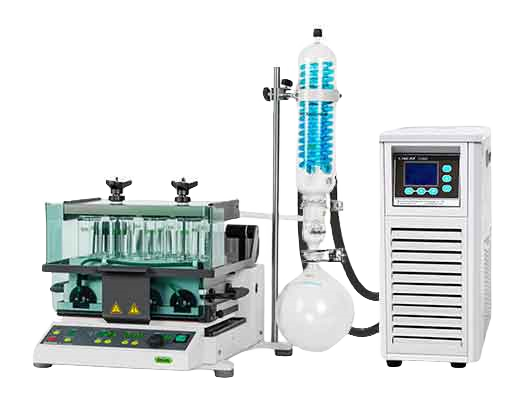
What Is a Lab Chiller
A lab chiller is designed to provide accurate temperature control for sensitive instruments and experiments. In research or medical testing, even a small temperature swing can affect the outcome. A good lab chiller maintains a steady coolant temperature and reacts quickly when heat loads change.
You will often find these units connected to analytical instruments such as spectrometers, laser systems, or electron microscopes. They run quietly, fit into tight lab spaces, and operate with clean fluids like deionized water. The main goal is to protect delicate equipment and keep results repeatable.
Key Differences Between Lab Chillers and Industrial Chillers
Although both systems share the same refrigeration principle, their design goals are completely different. Let’s look at the main differences that matter when you are choosing between them.
Size and Construction
Lab chillers are compact and built for controlled indoor environments. Their frames are smaller, and the internal parts are arranged for quiet, vibration-free operation. Stainless steel or corrosion-resistant materials are common, especially when using ultra-pure water.
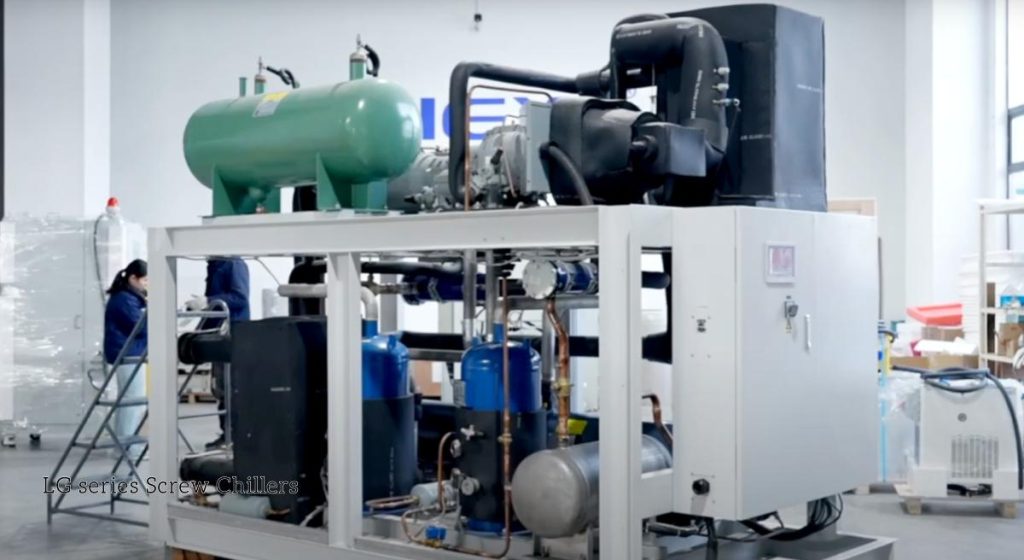
Industrial chillers are much larger. They are built to run in hot, dusty, and sometimes wet factory conditions. The construction is rugged, with heavy-duty compressors and bigger heat exchangers. Noise and footprint are less of a concern because these systems are usually installed in plant rooms or outdoors.
Temperaturbereich
A lab chiller usually operates within a moderate range, often between 5°C and 35°C, depending on the experiment. The idea is not extreme cooling but controlled precision.
Industrial chillers, on the other hand, cover a much wider range. Some run from below zero up to 40°C or more. They handle greater temperature swings because industrial processes vary widely, from molding molten plastic to cooling plating tanks.
Temperatur-Genauigkeit
Lab chillers maintain extremely tight temperature stability. Many can hold setpoints within ±0.1°C. They achieve this through precise sensors, PID control logic, and fast-acting valves.
Industrial chillers focus less on tight accuracy and more on keeping flow and capacity stable. A variation of one or two degrees is usually acceptable in manufacturing. For example, if you are cooling a plastic mold or a reactor, a small temperature swing will not hurt your process.
Kühlleistung
Lab chillers are smaller in capacity. They typically range from a few hundred watts to a few kilowatts. Their job is to cool instruments, not entire production lines.
Industrial chillers are built for large heat loads. They can handle tens or hundreds of kilowatts, cooling multiple machines at once. These systems run continuously and are optimized for efficiency under heavy use.
Wärmelast
Heat load is one of the main reasons to choose between the two systems. In a lab, the load often changes quickly but remains relatively small. A single device may heat up and cool down within minutes. The chiller must respond instantly to those fluctuations.
Industrial applications generate steady, heavy heat for hours. An injection molding line or a plating bath produces constant heat. The chiller’s job is to remove that energy efficiently without frequent cycling.
Understanding your process heat profile helps avoid under-sizing or over-spending.
Anmeldung
Lab chillers are used in environments where precision matters more than capacity. Typical uses include research laboratories, universities, hospitals, and R&D centers. They cool instruments like analytical equipment, medical lasers, and test chambers.
Industrial chillers serve manufacturing processes. They cool extrusion lines, chemical reactors, machine tools, or HVAC systems. The focus is to protect production equipment from overheating and keep the plant running around the clock.

Kosten
The cost difference often surprises new buyers. Lab chillers are smaller but more expensive per unit of cooling. Their high precision sensors, advanced controllers, and clean system design add to the price. You are paying for reliability and accuracy at small scale.
Industrial chillers provide more capacity for the money. They use standard parts and simpler controls, which makes them more cost-effective when cooling large volumes. However, installation and maintenance costs can be higher due to their size and energy use.
If your work depends on temperature accuracy, a lab chiller pays for itself by protecting your results. If you just need to move heat away from machines, an industrial chiller gives you better value.
When to Choose a Lab Chiller
Choose a lab chiller when your process needs precise and stable cooling. Research projects, laser optics, or sensitive testing setups all benefit from tight control. These systems are also perfect when space is limited or when the coolant must stay extremely clean.
If your goal is repeatable data and equipment protection, a lab chiller is the safer bet. The investment ensures consistent results and fewer surprises during experiments.
When to Choose an Industrial Chiller
If you are cooling large machines or an entire production area, an industrial chiller is usually the better fit. These systems are built to run day and night without complaint, taking on steady heat loads that never really stop.
They don’t mind harsh environments or a bit of dust. You set them up, keep them maintained, and they just keep running. In places like molding shops or chemical plants, a few degrees of temperature swing will not affect the process. What really matters there is keeping equipment reliable and production continuous.
Schlussfolgerung
LNEYA designs and manufactures industrial and laboratory chillers with diverse performance levels for diverse applications. Our engineers can help you determine which cooling system is best for your specific application.
If you’re considering purchasing new equipment or upgrading your existing equipment, please feel free to contact us.

Neueste Blogs
- Chiller Components and Refrigeration Fundamentals Guides
- Chiller Types and Selection Guides
- How Does a Peltier Cooler Work
- Peltier Chiller vs. Compressor Chiller
- What Is a Peltier Chiller
- OEM vs Aftermarket Chiller Spare Parts
- Chiller Surge
- Chiller Cooling Capacity Units
Katalog
- Dezember 2025
- November 2025
- Oktober 2025
- September 2025
- August 2025
- Juli 2025
- Juni 2025
- Mai 2025
- März 2025
- Februar 2025
- Januar 2025
- Dezember 2024
- November 2024
- Oktober 2024
- September 2024
- August 2024
- Juli 2024
- Juni 2024
- Mai 2024
- April 2024
- März 2024
- Februar 2024
- September 2023
- Juli 2023
- Juni 2023
- Mai 2023
- Januar 2023
Tag
luftgekühlte Kältemaschine Kühler Installation der Kältemaschine Wartung von Kühlanlagen chiller refrigerant Kältemaschinen Kalte Montage Gefrierschrank Kaltwassersatz Kühl-Heizsystem cooling system dynamisches Temperaturkontrollsystem energieeffizienter Chiller explosionsgeschützter Kühler Gefrierschrank Heizungsumwälzpumpe Industriekühler Industriekälteanlagen Industriekühlung industrieller Gefrierschrank Industriekühlschrank Mantelreaktor Laborkühlschrank Niedertemperaturkühler Nachrichten Ölkühler Prozesskühler process cooling Reaktorkühler Reaktorkühlung Reaktorkühlung Heizung Reaktorheizung Kühlung Kältethermostat Schneckenkühler Halbleiter-Kühlgerät Halbleiter-Testkühler sundi tcu Temperaturkontrolle Prüfkammer Thermostat Ultra-Niedertemperatur-Kühler Fahrzeug-Test-Kühler Kaltwassersatz wassergekühlte Kältemaschine
Kontakt
Verwandte Chiller


KONTAKT US
TEL:
EMAIL:
WeChat & WhatsApp:

Wechat QR

Haben Sie eine Frage oder benötigen Sie ein Angebot? Füllen Sie das untenstehende Formular aus, und unser Team wird sich innerhalb von 24 Stunden bei Ihnen melden.

