 LNEYA Industriekühler Hersteller Lieferant


What Are the Common Types of Chiller Compressors
After being compressed by the compressor, the refrigerant gas increases in pressure and temperature, allowing it to enter the condenser to release heat to water or air. Common chillers are generally categorized by compressor type as screw chillers, scroll chillers, and centrifugal chillers. What are the characteristics of these compressors? How do they work? What cooling systems are they suitable for?
Related: Chiller compressor brand list
What is a screw compressor?
A screw compressor generates pressure through the rotation and compression of two rotors—a female rotor and a male rotor. The rotors rotate in opposite directions, one clockwise and the other counterclockwise, similar to two intermeshing screws compressing gas.
The rotation draws gas into the gap between the rotors, where it is gradually compressed along the avity formed between the rotors and the casing, ultimately being discharged through the outlet into the condenser.
A significant advantage of screw compressors is their ability to operate stably over extended periods of time. Because they don’t require the reciprocating motion of piston compressors, there’s no shock or vibration, resulting in minimal mechanical wear even in 24/7 operation.
Many brands of compressors are equipped with variable frequency control, which automatically adjusts speed based on actual load. This allows them to maintain high energy efficiency even at partial load.
However, they also have some limitations. At low loads, their energy efficiency is often not as high as that of scroll compressors. Furthermore, they have higher requirements for lubricant oil properties, condensing temperature, and environmental conditions, requiring regular lubricant inspection and replacement. Furthermore, screw compressors are more expensive.
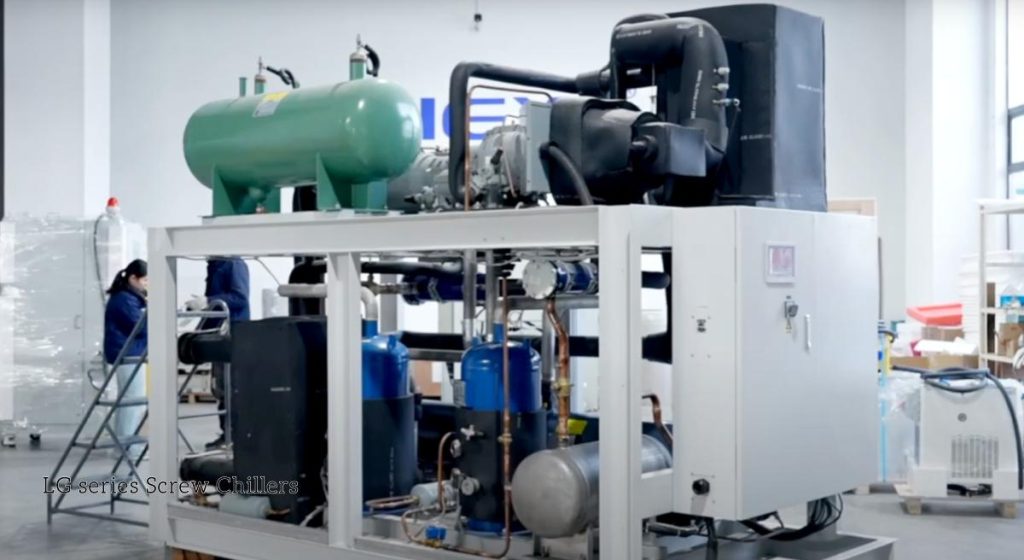
They typically provide cooling capacities ranging from tens to hundreds of kilowatts and are often used in medium- to large-scale screw chiller systems to provide stable temperature control for equipment and processes such as semiconductors, chemical processing, injection molding, and laser cutting.


What is a scroll compressor?
A scroll compressor consists of a fixed scroll and a moving scroll. The movable scroll rotates eccentrically around the fixed scroll at a constant angle. The movable scroll orbits around the fixed scroll without rotating about its own center. The refrigerant enters the spiral chamber and is compressed as it travels along the spiral toward the center.
Compared to screw compressors, they are more compact and produce less noise and vibration during operation. They are often used in small and medium-sized cooling systems, especially in laboratories, cleanrooms, hospitals, and other locations where space and sound requirements are stringent.
Scroll compressors generally have a low Kühlleistung, but multiple units can be connected in parallel to meet higher cooling capacity requirements, improving energy efficiency at partial loads.
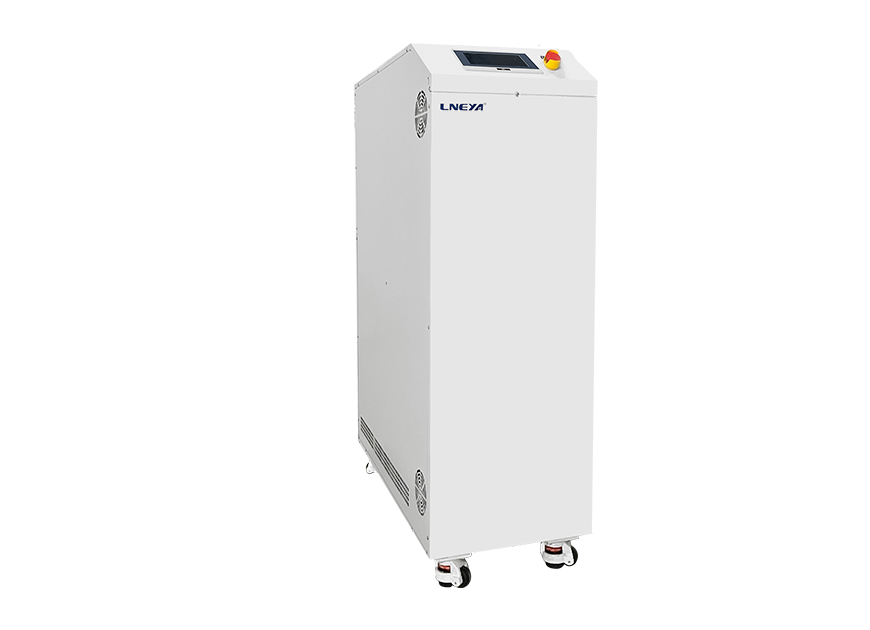
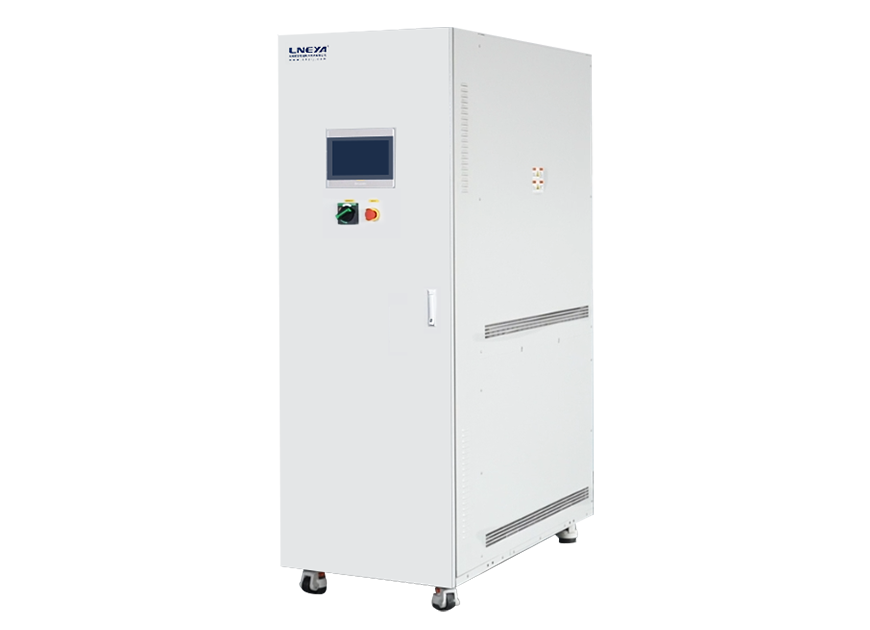
What is a centrifugal compressor?
A centrifugal compressor draws in refrigerant gas through a high-speed rotating impeller and flings it toward the outer edge, where it flows into a diffuser. In a centrifugal compressor, the diffuser slows down the gas, raising its pressure and turning kinetic energy into pressure energy, before releasing it through the exhaust.
The greatest advantage of centrifugal compressors is their ability to compress large volumes of gas simultaneously, resulting in high cooling capacities for centrifugal chillers. They also feature fewer moving components, which reduces the risk of breakdowns and lowers maintenance needs.
Centrifugal chillers are often used in large projects, such as large cleanrooms, data centers, and campus-wide cooling systems. While the initial investment is higher, they offer higher energy efficiency and lower electricity costs over the long term.
Schlussfolgerung
LNEYA’s main product lines include Scrollkühler und Schrauben-Kühlmaschinen. We offer standard and custom chillers with various configurations to meet diverse operating conditions across various industries. Our compressors are sourced from internationally renowned brands such as Copeland, Danfoss, Tecumseh, and Carlyle.
Contact us for more information about our chillers.

Neueste Blogs
- Chiller Components and Refrigeration Fundamentals Guides
- Chiller Types and Selection Guides
- How Does a Peltier Cooler Work
- Peltier Chiller vs. Compressor Chiller
- What Is a Peltier Chiller
- OEM vs Aftermarket Chiller Spare Parts
- Chiller Surge
- Chiller Cooling Capacity Units
Katalog
- Dezember 2025
- November 2025
- Oktober 2025
- September 2025
- August 2025
- Juli 2025
- Juni 2025
- Mai 2025
- März 2025
- Februar 2025
- Januar 2025
- Dezember 2024
- November 2024
- Oktober 2024
- September 2024
- August 2024
- Juli 2024
- Juni 2024
- Mai 2024
- April 2024
- März 2024
- Februar 2024
- September 2023
- Juli 2023
- Juni 2023
- Mai 2023
- Januar 2023
Tag
luftgekühlte Kältemaschine Kühler Wartung von Kühlanlagen Kältemaschinen Kalte Montage Gefrierschrank Kaltwassersatz dynamisches Temperaturkontrollsystem energieeffizienter Chiller Heizungsumwälzpumpe Industriekühler Industriekälteanlagen Industriekühlung industrieller Gefrierschrank Industriekühlschrank Mantelreaktor Laborkühlschrank Niedertemperaturkühler Nachrichten Prozesskühler process cooling Reaktorkühlung Reaktorheizung Kühlung Kältethermostat Schneckenkühler Halbleiter-Kühlgerät Halbleiter-Testkühler sundi tcu Temperaturkontrolle Prüfkammer Thermostat Ultra-Niedertemperatur-Kühler Fahrzeug-Test-Kühler Kaltwassersatz wassergekühlte Kältemaschine
Kontakt
Verwandte Chiller


KONTAKT US
TEL:
EMAIL:
WeChat & WhatsApp:

Wechat QR

Haben Sie eine Frage oder benötigen Sie ein Angebot? Füllen Sie das untenstehende Formular aus, und unser Team wird sich innerhalb von 24 Stunden bei Ihnen melden.

