 LNEYA Industriekühler Hersteller Lieferant


What Types of Explosion-Proof Protection Are Used in Chillers
In facilities that handle solvents, gases, or powders, Kältemaschinen must do more than just cool process water. They need to run without creating ignition risks. That is why explosionsgeschützte Kältemaschinen exist. The choice of protection type can mean the difference between safe operation and costly downtime.
Let’s walk through the main explosion-proof protection types you will see in chillers, how they work, and where they make sense.
Pressurized or Purged Explosion Proof
• How it Works
A pressurized or purged system keeps hazardous gas or dust out of the enclosure. Clean air or inert gas flows through the electrical cabinet at a slight positive pressure. That pressure stops flammable vapors from entering. Sensors monitor the pressure, and if it drops, the system shuts down or alarms.
• Where it Fits
Pressurized chillers are usually found in labs where solvent vapors appear only during certain runs. They work well when you cannot use heavy flameproof boxes but still need reliable protection. The setup needs a steady source of purge gas and regular checks of seals and flow paths.
Flameproof or Explosion Isolation
• How it Works
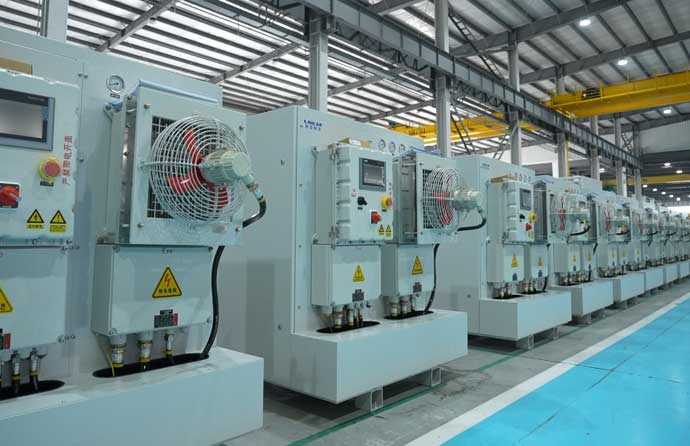
Flameproof protection, often called explosion isolation, is about containment. Electrical parts that could spark sit inside thick metal enclosures. If an arc happens inside, the housing traps it. By the time hot gases leave the enclosure, they are cooled below ignition temperature.
• Where it Fits
Flameproof designs are common in refineries and coating lines. They handle high power circuits such as compressor starters or motor contactors. They are rugged and proven, but heavy. Service can take longer since covers and seals must be opened and resealed to maintain certification.
Intrinsic Safety Ex i
• How it Works
Intrinsic safety, or IS, limits the energy inside a circuit so it never reaches ignition levels. Current and voltage stay low, even if there is a short. Barriers or isolators make sure the circuit remains safe.
• Where it Fits
This approach is often used in sensor wiring and control loops. For chillers, it applies to probes, transmitters, and signal circuits that run into hazardous areas.
Increased Safety Ex e
• How it Works
Increased safety, or Ex e, means the design minimizes the chance of sparks or hot surfaces. Terminals, connectors, and other components are built with extra spacing and insulation. The idea is not to limit energy but to prevent faults from creating an ignition source.
• Where it Fits
Ex e protection shows up in fan motors and junction boxes inside explosion-proof chillers. It is lighter than flameproof and more flexible than intrinsic safety, but it has strict rules for assembly and inspection. It works best in circuits that are not supposed to spark under normal operation.
Combination Types
In practice, one type of protection rarely covers a whole chiller. Compressors may sit in flameproof housings. Sensors may run with intrinsic safety barriers. Control terminals may follow Ex e. Purged enclosures may house PLCs or HMIs. That blend kept the system certified while staying practical for maintenance.
Customize Your Explosion Proof Chiller
If you are planning a project, think about your hazard level, the layout of your process, and how your operators will maintain the system. The best explosionsgeschützter Kühler protection is the one that matches your environment and keeps uptime high.
At LNEYA we design chillers that meet international explosion-proof standards and balance safety with efficiency. Our engineers can advise on the right mix of protection types. Contact us today and we will prepare a system that fits your process and complies with global safety codes.

Neueste Blogs
- Chiller Components and Refrigeration Fundamentals Guides
- Chiller Types and Selection Guides
- How Does a Peltier Cooler Work
- Peltier Chiller vs. Compressor Chiller
- What Is a Peltier Chiller
- OEM vs Aftermarket Chiller Spare Parts
- Chiller Surge
- Chiller Cooling Capacity Units
Katalog
- Dezember 2025
- November 2025
- Oktober 2025
- September 2025
- August 2025
- Juli 2025
- Juni 2025
- Mai 2025
- März 2025
- Februar 2025
- Januar 2025
- Dezember 2024
- November 2024
- Oktober 2024
- September 2024
- August 2024
- Juli 2024
- Juni 2024
- Mai 2024
- April 2024
- März 2024
- Februar 2024
- September 2023
- Juli 2023
- Juni 2023
- Mai 2023
- Januar 2023
Tag
luftgekühlte Kältemaschine Kühler Installation der Kältemaschine Wartung von Kühlanlagen chiller refrigerant Kältemaschinen Kalte Montage Gefrierschrank Kaltwassersatz Kühl-Heizsystem cooling system dynamisches Temperaturkontrollsystem energieeffizienter Chiller explosionsgeschützter Kühler Gefrierschrank Heizungsumwälzpumpe Industriekühler Industriekälteanlagen Industriekühlung industrieller Gefrierschrank Industriekühlschrank Mantelreaktor Laborkühlschrank Niedertemperaturkühler Nachrichten Ölkühler Prozesskühler process cooling Reaktorkühler Reaktorkühlung Reaktorkühlung Heizung Reaktorheizung Kühlung Kältethermostat Schneckenkühler Halbleiter-Kühlgerät Halbleiter-Testkühler sundi tcu Temperaturkontrolle Prüfkammer Thermostat Ultra-Niedertemperatur-Kühler Fahrzeug-Test-Kühler Kaltwassersatz wassergekühlte Kältemaschine
Kontakt
Verwandte Chiller


KONTAKT US
TEL:
EMAIL:
WeChat & WhatsApp:

Wechat QR

Haben Sie eine Frage oder benötigen Sie ein Angebot? Füllen Sie das untenstehende Formular aus, und unser Team wird sich innerhalb von 24 Stunden bei Ihnen melden.

