LNEYA Industriekühler Hersteller Lieferant


What is the refrigeration principle of the glycol chiller system
Glycol Chiller System , as we can tell from
its name, it is to use Glycol as the refrigeration agent for the chiller.
In the all air environment, because of the
low temperature in the outdoors, it is impossible to use a cooling tower to
supply the inner area directly with the cold air-conditioner. In addition, the
cold air in the outdoors could be used directly as refrigerator source,with glycol
as refrigerant, it can introduce the natural cold air into the inner area and
supply cold air-conditioner. If we need to heat the outer area and provide
cooling for the inner area, we can turn off the chiller and Boiler or
industrial hot water is still used as heat source for external heating.
Install plate heat exchanger in the
outdoor, and the outdoor cold air is introduced into the plate heat exchanger
by the fan. The glycol solution and the outdoor cold air are exchanged in the
plate heat exchanger. The cooled glycol solution enters into the air
conditioners in the inner area and exchange with mixed air. Then the mixed air
enters into the inner room with lower temperature and supply cooling. The
temperature of glycol solution rise up, it comes back to the plant heat
exchanger in the outdoor again, exchange heat with the cold air in the outdoor
and continue this cycling after the temperature is lowered. This way of heat exchange is usually used in
the heat recycling system.
It is a very energy-saving way that use
glycol as a refrigerant to introduce the cold air in the outdoors to supply
cooling for the inner area. All we need to do is to install a heat exchanger in
the outdoor.when it works, the cold water equipment closed, opening the fan and
the glycol chiller can bring cooling for the inner area. In this way, we can
save energy and reduce the cost.
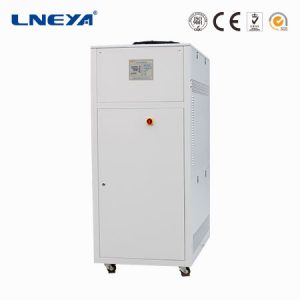
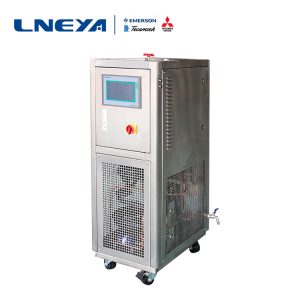
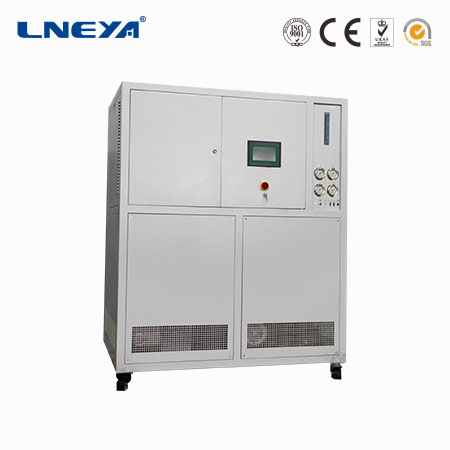
Our LNEYA self-developed low-temperature
refrigeration circulator, also known as the glycol chiller, has a cooling
temperature range from -125°C to -20°C, using a computer cascade temperature controller and a PT100
temperature sensor. The product adopts ethylene glycol and water mixture for
circulating refrigeration to save water resources; adopts supercooling
technology to ensure temperature stability at low temperatures; adopts a fully
enclosed design to ensure the purity of the cold heat transfer medium, prevent ice
crystals, and increase the life of the heat transfer fluid. There are two
temperature series, LX and LT, to meet the low temperature control requirements
of chemical and pharmaceutical low temperature reactions. You can contact us to
obtain the detailed parameters of the temperature range you need.
Verwandte Empfehlungen
-

Working Principle of Glycol Chiller
1666For the low-temperature chiller using ethylene glycol solution, wecall it glycol chiller. Its outlet water temperature is generally below - 10 ℃, and the specific temperature requirements shall be subject to theneeds of users. Glycol chillers ar...
Details anzeigen -
Routinewartung der Multireaktor-Temperiergeräte der tcu
1484Die TCU-Multireaktor-Temperiergeräte sind in Forschungsabteilungen wie Erdöl, Chemie, elektronische Instrumente, Physik, Chemie, Biotechnik, Prüfung physikalischer Eigenschaften und chemische Analyse, Hochschulen und Universitäten weit verbreitet...
Details anzeigen -
Semiconductor laser automatic temperature control equipment accessories fault solution
1769Semiconductor laser automatic temperature control compressor frosting, may be circulating water circulation or valve is not open, check the water valve, all pipelines, to ensure smooth, install short-circuit pipeline. It may be that the circulatin...
Details anzeigen -
Solution to the inability to cool down the industrial high and low temperature recirculating chiller
1813When the high and low temperaturerecirculation chiller system is in use, what is the general cause if the hightemperature cannot be reduced? How should we deal with such failures?First, let’s analyze theprinciple and method of cooling. The circ...
Details anzeigen