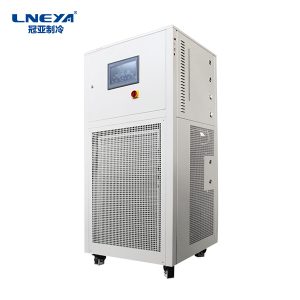
LNEYA Industriekühler Hersteller Lieferant


Temperaturkontrollsystem zur Kontrolle der Testtemperatur von integrierten Schaltungen
Advances in semiconductor technology have led to the development of next-generation electronic devices such as integrated circuits, which have more and more active components, higher circuit complexity, smaller area, and tighter wiring. These attributes generate more heat in the electronic device and provide fewer opportunities for heat dissipation. This results in higher operating temperatures and therefore reduces reliability, especially for integrated circuits operating at high frequencies and high thermal loads. The small size of integrated circuits and tightly packed circuits of surrounding equipment make it more difficult to cool integrated circuits using conventional fans or heat sinks. In addition, integrated circuits may experience large temperature fluctuations that affect their performance attributes, such as the timing of mathematical operations, data transfers, and read / write operations, especially at high frequencies. Temperature changes as low as ± 5 ° C can cause changes in operating frequency up to 20 MHZ, which can severely affect chip performance.
Prior art methods for controlling the temperature of integrated circuits use a combination of a heat sink attached to the integrated circuit and a cooling fan that directs airflow through the heat sink. However, it is difficult to remove a large amount of heat by these methods. First, the thermal mass of the heat sink increases the time it takes for the integrated circuit to reach the required temperature. Second, once the integrated circuit has risen to the required temperature, the relatively low specific heat capacity of the air limits the ability of the integrated circuit. The cooling system removes excess heat at a sufficiently high rate. For these temperature control systems, it is particularly difficult to quickly respond to large temperature changes that may occur in high-performance chips.
The bulky heat sink and cooling fan during the test of the integrated circuit chip can interfere with the operation of the robot processor used. The robot handler has an articulated arm with a vacuum port for picking up integrated circuit chips from a rack and fixing them in a test socket. When powering the integrated circuit, various read / write operations are performed on the integrated circuit. Typically, one or more radiators and cooling fans are connected to the arm of the robot, which makes the arm bulky and hinders its ability to pick up a single integrated circuit and place it accurately in a test socket. Therefore, it is desirable to have a temperature control system that is compact, lightweight, and can be easily retrofitted to existing test systems.
Therefore, there is a need for a temperature control system capable of maintaining electronic equipment at a predetermined temperature. It is also desirable for temperature control systems to rapidly raise and lower the temperature of electronic devices. It is further desired that the temperature control system be compact, lightweight, and suitable for use with existing automatic testers.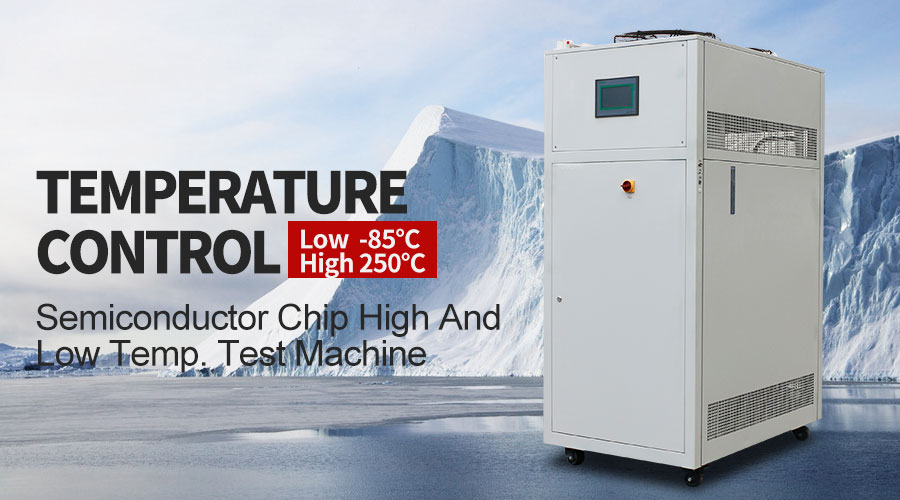
Lneya actively explores and researches the component test system, which is mainly used for temperature test control in integrated circuit chip testing. It has wide temperature orientation and high temperature rise and fall. The temperature range is -92 ° C ~ 250 ° C. This product is used in harsh environments. In the manufacture of semiconductor electronic components, the assembly of IC packages, as well as engineering and production testing phases include electronic thermal testing and other environmental test simulations at temperatures (-45 ° C to + 250 ° C). During the test, the excellent temperature is completed. Once the integrated circuit chip is put into actual use, it can be exposed to extreme environmental conditions to meet stringent military and telecommunication reliability standards.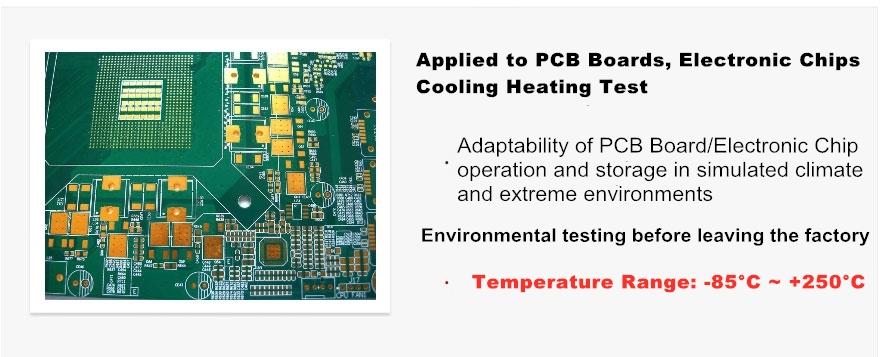
Verwandte Empfehlungen
-

Water cooled low-temperature circulators in the testing industry of new energy vehicles
1561The development of the new energy vehicle industry is relatively rapid. Driven by technological innovation, it is believed that the new energy vehicle industry is facing opportunities. However, with the development of the new energy vehicle indu...
Details anzeigen -
Wie man die Lebensdauer eines Glykol-Kühlsystems verlängert?
1533Um die Lebensdauer Ihres Glykolkühlers in industriellen Anwendungen zu verlängern, beachten Sie bitte folgende Punkte: 1. Verwenden Sie sorgfältig Frostschutzmittel in Automobilqualität Verwenden Sie kein Frostschutzmittel in Automobilqualität oder ungeeignetes Frostschutzmittel. Da diese Gl...
Details anzeigen -
Battery-specific temperature cycle test chamber Chiller tips
1599With the rapid development of the economy, the new energy automobile industry has also achieved rapid development, and the requirements of the battery industry are also getting higher and higher. In order to adapt to related industries, LNEYA has ...
Details anzeigen -
Beschreibung der Eigenschaften von Kühlkörpern bei der Chip-Temperaturkontrolle
1971Mit der kontinuierlichen Entwicklung elektronischer Chips schreitet auch deren Wärmeableitungstechnologie voran. Die LNEYA Chip-Temperaturkontrolltechnologie wird zusammen mit den Chip-Testgeräten kontinuierlich gefördert. Der Entwicklungstrend der modernen Computerchips...
Details anzeigen