LNEYA Industriekühler Hersteller Lieferant


How does the Industrial Water Chiller System Work?
When using industrial machinery, a cooling system may be required to prevent the machine from overheating. Refrigeration equipment can effectively keep materials in the optimal temperature range, but how does the chiller work? Understanding the working principle of industrial water chiller is very helpful to select the best refrigeration system to meet the needs of users.
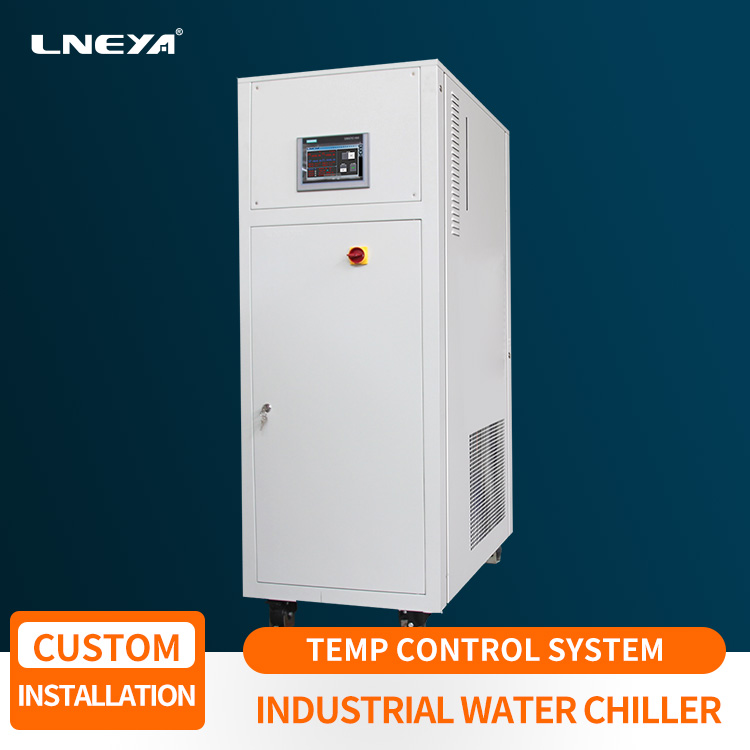
Working principle of industrial water chiller
In short, industrial water chillers cool process fluids. Process fluid (usually water or water / glycol mixture) is used to cool machinery, equipment, etc. The process fluid absorbs heat from the cooled object and then passes through the chiller, where the heat is removed from the fluid and transferred to the ambient air.
Refrigeration circuit
The industrial water or glycol chiller system consists of two main circuits: refrigeration circuit and fluid circuit. The refrigeration circuit consists of four parts: compressor, condenser, expansion valve and evaporator. The refrigeration circuit removes heat from the process fluid. The fluid circuit usually consists of fluid reservoir, pump, filter and heat exchanger. The fluid circuit carries process fluid around the cooled object.
Refrigeration cycle steps:
Refrigeration circuit is the most technical part of the working mode of chiller. The refrigeration cycle uses the principle of thermodynamics to effectively transfer heat from one region to another. In the case of a chiller, heat is extracted from the cooled fluid and transferred to the ambient air.
Kompressor
The refrigeration cycle starts with the compressor. The compressor uses gaseous low-pressure and low-temperature refrigerant to compress it into high-pressure and high-temperature gas.
Verflüssiger
The gas then flows through the coils in the condenser. In the condenser, air or water will flow through the coil and remove heat from the refrigerant. As the refrigerant loses heat, it will begin to condense until all the gases condense into a liquid.
Expansionsventil
After leaving the condenser, the liquid passes through the expansion valve. The expansion valve limits the flow of refrigerant. When the high-pressure liquid passes through the expansion valve, it enters the evaporator.
Verdampfer
The evaporator is where the refrigerant begins to evaporate. When the refrigerant evaporates, it becomes very cold and absorbs a lot of heat. The process fluid will interact with the cold refrigerant in the evaporator. Heat is removed from the fluid and transferred to the refrigerant. The refrigerant then enters the compressor and the cycle begins again.
Verwandte Empfehlungen
-

Selection of Temperature Control System for Laboratory Resin Reaction Kettle
15691. Choose from the quality of the laboratory resin reactor temperature control system: can affect the quality of the laboratory resin reactor temperature control system, may be the use of accessories. There are some small factories on the market t...
Details anzeigen -
LNEYA Low temperature thermostatic bath instructions
1989Low temperature thermostat is widely used in petroleum, chemical industry, electronic instruments, physical, chemical and biological engineering, medicine and health, life sciences, food industry, physical testing and chemical analysis and researc...
Details anzeigen -
Anwendung des Kühl- und Heizkreislaufs eines ummantelten Reaktors bei chemischen Reaktionen
1673Anwendung von Kühl- und Heizsystemen für ummantelte Reaktoren
Details anzeigen -
Environmentally Friendly Cold Plate Freezer
1408During the period, we all know that the supervision of environmental protection is springing up, and the editor of cold plate freezer tells everyone that the awareness of environmental protection has spread.According to previously published data, ...
Details anzeigen